Buscemi is the Godfather of the Boardwalk


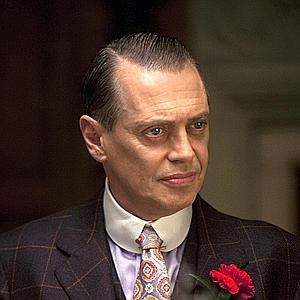
Buscemi as Enoch "Nucky" Thompson
Looking through the list of Steve Buscemi’s film and television credits as an actor, not many of the titles stand out– except for “The Sopranos,” “Pulp Fiction” and “Fargo.” Buscemi, who’s also a director, is the sort of frequently working character actor that people have seen in a multitude of roles, most of them smarmy and fast talking, if not downright psychopathic. He’s the guy with the memorable face and sometimes scary, toothy smile. The one whose name you may not be able to remember, much less pronounce.
Well, that all changed–effective Sunday night. Buscemi’s riveting star turn as Enoch “Nucky” Thompson in HBO’s thrilling “Boardwalk Empire” will vault him into the stratosphere of legendary onscreen gangsters. Just like “The Sopranos” did for James Gandolfini, who was little-known when that brilliant, game-changing series premiered in 1999.
HBO has scored another hit, and “Sopranos” fingerprints are all over “Boardwalk,” starting from creator Terence Winter and harking back to Buscemi’s role as Soprano cousin Tony Blundetto in the dearly departed series.
If “Boardwalk” follows the pattern of “The Sopranos” and other serialized shows—even those on free TV like “Lost” and “24,” people do not necessarily jump on board the train ride away. But it’s okay to come late to this party if you appreciate scintillating storytelling, directed and written by top talent (including Martin Scorsese for the pilot) and the integration of legendary, historic characters like Al Capone, Lucky Luciano and Arnold Rothstein into a drama that illuminates the past while it resonates in the present.
Nucky, based on a real-life character with a similar name, is the treasurer of Atlantic City, New Jersey, but in essence runs the whole town as Prohibition dawns on the Sin City of its era. In the 1920s, the seaside resort town was known as the world’s playground and featured nightclubs and entertainment that rivaled Broadway’s. “If you want to be a gangster in my town, you can pay for the privilege,” he says.
Right off the bat, you see his powerful, charismatic, and twisted character as he goes from addressing a women’s temperance organization to arranging shipments of bootleg whiskey– an arrangement that goes horribly and violently awry and sets the tone for the 12-part series.
With his brother (played by Shea Whigham) as the city’s subservient sheriff, Nucky has free reign to do business with gangsters from New York and Chicago from his power base in a suite of room at the Ritz Carlton Hotel, where he keeps his materialistic flapper floozy—until he moves on to a better breed of woman.
Spoiler alert, as I’ve seen the first six episodes: In an interesting plot twist, in collusion with his brother, he has that woman’s husband knocked off to cover the tracks of a bootleg deal gone bad. As they would say in later decades, that man sleeps with the fishes.
Meanwhile, Jimmy Darmody, Nucky’s moody and restless protégé who’s recently back from the trenches in World War I, is trying to reclaim his rightful place within the A.C. organization–but after an unauthorized orgy of violence on a dark country road, sets off on his own path with a young Al Capone in Chicago. The Feds, led by troubled Agent Nelson Van Alden, are hot on their tail– and they’re on to Nucky’s hugely profitable and thoroughly illicit dealings. But bureaucracy is working in the mobsters’ favor, for now.
The state of race relations nine decades ago comes to the fore in a lynching that is pinned on the local leader of the Ku Klux Klan. With Nucky’s blessing, his partner in crime, the leader of Atlantic City’s black community, uses a tool box to extract the price of the murder. It’s a brilliant piece of acting by Michael Kenneth Williams as Chalky White.
Steve Buscemi has said that he always flips to the end of the script to see if he gets killed in the end. Mark my words, you’ll be tuning in to find out.