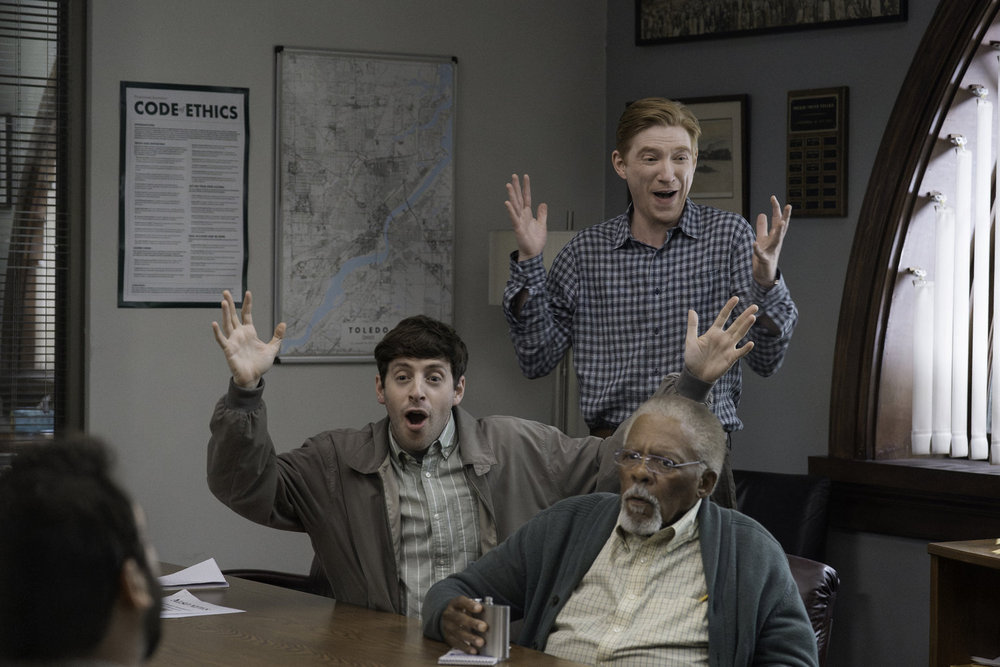
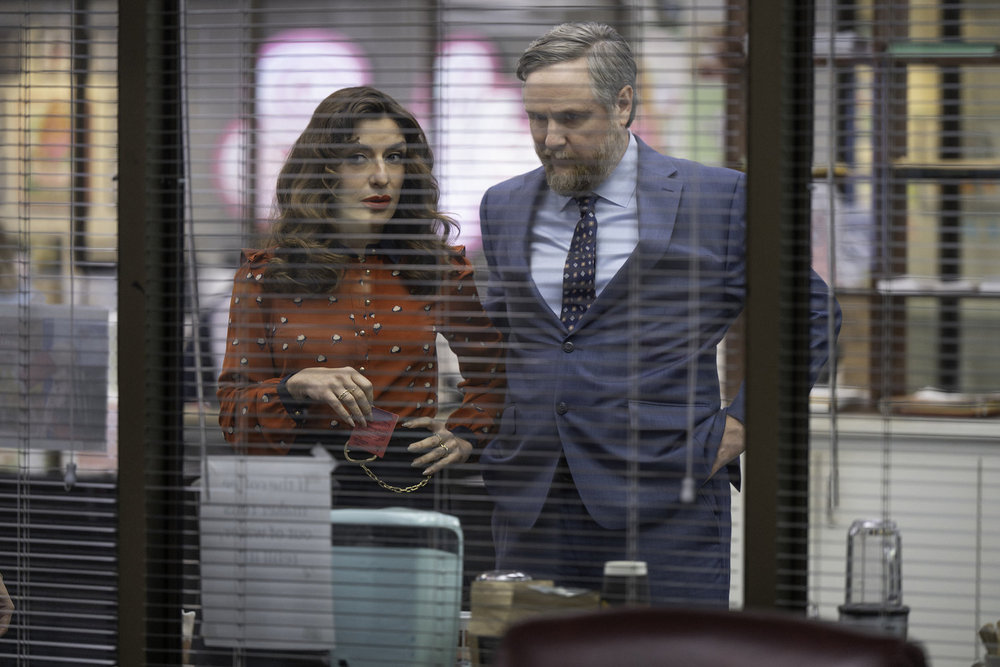
From Scranton to Toledo. When Greg Daniels first turned his lens on the absurdities of office life, he gave the world The Office, a sitcom that reshaped television comedy. Now, years after that show became a cultural staple, Daniels is returning to a similar style of storytelling with The Paper, a Peacock original that trades Dunder Mifflin’s endless supply of copy paper for the precarious stacks of a struggling local newsroom.
For Daniels, the inspiration to revisit a documentary-style workplace comedy was both nostalgic and timely. “I had this early inkling of an idea and the connection being paper, since they sold paper [at Dunder Mifflin],” he explained during a Los Angeles news conference before the series premiere. “And the idea that paper was viewed by this other conglomerate as just another commodity and they didn’t appreciate the actual incredible importance to democracy and the culture of the newspapers. And at each stage, it felt more and more interesting and viable.”
The show arrives at a moment when questions about the future of journalism loom large. Small newspapers across the country have been shuttering at alarming rates, leaving “news deserts” where watchdog reporting once thrived. Daniels saw an opportunity to not only poke fun at the quirks of a newsroom, but also to underline the stakes of what’s being lost. “The original cast of The Office, which was such a lightning-in-a-bottle situation, they’re super supportive of this,” he said. “This isn’t going to hurt the original show at this point. So anyway… when I had the opportunity to pitch it to Michael [producer Michael Koman], whose work I loved and respected, and he started to respond, then it was like, hmm, maybe this is a good idea.”
Domhnall Gleeson, who plays one of the newsroom’s central figures, admitted the role reshaped how he views the profession. “I’ve always understood the importance of journalism,” he said. “I think maybe I’ve not always understood what it takes to do it and to do it well, but always had a huge amount of respect for everybody. I’ve always been quite romantic about it as well. And then kind of amazing then to see the reality of the day to day, and in a way it becomes even more impressive once you’ve seen what people are up against just to keep going. Speaking truth to power, all that sort of stuff is incredibly important.”
Gleeson also noted that the series’ faux-documentary camera style altered the way he approached his performance. “Definitely,” he said when asked if it changed his acting. “Like everybody knows the kind of tropes that go along with it… looking down the lens and finding the lens and that awkward glance and all that sort of stuff. So you’re aware of that, but then making it feel real, making it work for these characters in these environments was sort of the new challenge. So it definitely makes you behave differently because you’re being observed. Nothing’s off the record. That’s scary—and I think scary for the characters—so that was useful.”
If Gleeson represents the idealistic side of the newsroom, Sabrina Impacciatore brings something entirely different with her role as Esmeralda, a cunning and often manipulative staffer who refuses to let scruples get in the way of survival. For Impacciatore, whom US audiences came to know during her run as hotel manager Valentina on The White Lotus Season 2, embodying such a character was both thrilling and daunting. “This character arrived in my life through these sides,” she recalled. “The sides were 11 pages of monologues. And I felt when I read the sides, I thought this is the most brilliant comic material I’ve ever read. So that was so incredibly inspiring to me. It was like giving me a key to understand, for example, how manipulative was this character.”
The actress admitted she initially struggled with Esmeralda’s slippery nature. “I am a person that is really transparent. I have issues about being too transparent. So, to me, it was really difficult to understand how a mind can work in a sneaky way and thinking things that Sabrina, me, would never be able to think,” she said. Even during her audition, she approached Esmeralda with raw sincerity. “I was really crying, I was really shaking, I was doing everything real. And then at the end of the audition, I can’t remember who, if Greg or Michael, they told me, ‘Sabrina, do you understand that Esmeralda is manipulative and she’s pretending to cry?’ And I said, ‘Yes, but she’s very good at this.’”
From there, Impacciatore leaned into the paradox—playing a woman whose duplicity might easily turn audiences against her. “I was scared that this character could be not likeable because she’s so manipulative, she’s so nasty. She says things that are very, very bad, very, very. And so I thought, how can I make her nice? And I thought about Tweety… that little bird.”
That balance of comedy and discomfort—recognizable humanity pushed to absurd extremes—is exactly what Daniels has long excelled at. The Paper is not simply a retread of The Office, but a spiritual cousin that updates the mockumentary format for a new workplace.