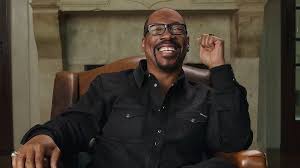
If you’ve ever wondered what it might feel like to sit across from Eddie Murphy at a dinner table — really sit with him, not just watch him launch into one of his famous riffs — the new Netflix documentary Being Eddie is probably the closest you’ll ever get.
Taking place in his sprawling palace of a home with a retractable roof—whose concept he copied from Cher’s home–it’s warm, funny, surprisingly reflective, and packed with career gems that even longtime fans may have forgotten. And every so often, Murphy drops a piece of new information so casually that you’re scrambling to rewind just to confirm he actually said it.
The film zeroes in on the big creative milestones that shaped his decades-long run at the top: Saturday Night Live, 48 Hrs., Beverly Hills Cop, Coming to America, The Nutty Professor, Shrek — the hits that don’t just define a career, but entire eras of pop culture. But what makes the documentary stand out is that it moves through these touchstones with the breezy confidence of someone who’s finally comfortable enough to talk about them honestly.
And that’s what’s genuinely refreshing here: Murphy isn’t performing. He’s reminiscing. And so are a number of his comedy colleagues including Arsenio Hall, Chris Rock and Jerry Seinfeld.
One of the biggest takeaways is just how young he really was during those early rocket-ship years. The film opens with the now-famous clip of his 19-year-old self at SNL doing his Mr. Robinson’s Neighborhood sketch — the moment Lorne Michaels, in a new interview, calls “the night Eddie Murphy saved the show.” It’s a bold statement, but the doc backs it up with archival footage showing an SNL cast and crew genuinely shell-shocked by how effortlessly he owned the stage.
We also get new insight into how 48 Hrs. almost didn’t happen for him. Murphy reveals that he didn’t land the role until weeks before shooting and that the studio still wasn’t convinced a 21-year-old comic could carry a gritty buddy-cop film. You can practically feel him smiling at the memory, like he knows the punchline before we do — because, of course, the movie became a massive hit and helped redefine the entire action-comedy genre.
The doc also treats Beverly Hills Cop with the reverence it deserves. Murphy admits for the first time that he was terrified to take on the role of Axel Foley — “terrified” might seem strange coming from a guy who seemed born with swagger, but that vulnerability is what gives the documentary its heart. He talks about how the original script was darker, how the first director left after a week, and how the tone changed only once he started improvising. Those improvisations, by the way, are still laugh-out-loud funny even in rough behind-the-scenes footage.
The biggest emotional surprise, though, might be the section about Coming to America. Not the big flashy moments — we all know the barbershop scene is iconic — but Murphy quietly acknowledging how personal the film was for him. He shares a new anecdote about convincing the studio that an all-Black cast wasn’t just viable, but necessary. Hearing him say, “I wanted to show Black royalty before anyone else was doing it,” hits differently in 2025 than it did in 1988.
Then there’s the Shrek chapter, which is pure joy. Murphy reveals that Donkey was originally written as “more subdued,” which becomes hilarious once you imagine the franchise without his trademark shrieking enthusiasm. There’s even a clip of early voice tests that feels like a lost treasure from the animation vault.
But the doc isn’t just a celebration — it’s also surprisingly introspective about the quieter years. Murphy talks openly about stepping back from Hollywood, raising his children, and recognizing he needed a break from the treadmill of fame. It’s calm, thoughtful, and maybe the most grounded he’s ever appeared on camera.
We get a portrait of an artist who knows exactly what he’s accomplished but doesn’t need to brag about it. The new information he shares lands more like confessions than revelations — small moments that make the larger picture feel fuller, more human.
By the time the documentary circles back to his recent career resurgence and hints at what’s next, you feel like you’ve spent real time with him. Not the Eddie Murphy who could fill stadiums, but the Eddie Murphy who sits in a chair and tells a story with a smile so funny you start laughing before he’s even reached the punchline.
Being Eddie isn’t just a retrospective — it’s a reminder of why he’s been beloved for so long. It affirms his place in the comedy canon while giving us a rare, unfiltered look at the man behind the legend.