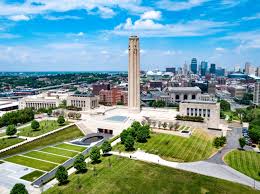
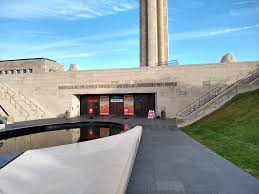
After a memorable Fourth of July celebration complete with a thrilling fireworks display, the United States National World War I Museum and Memorial in Kansas City is getting ready for another huge event, its 100-year anniversary.
The museum has a fascinating backstory of its founding less than a decade after the Great War ended, led by the generosity of the people of Kansas City.
In preparation for its centennial, the Museum and Memorial has completed major upgrades that will significantly enhance the experience for visitors, including a life-size field hospital installation that provides vivid insights into the realities of World War I.
The museum also features a groundbreaking new exhibit, Encounters, that uses state of the art audio technology to bring personal stories of soldiers, medical personnel and everyday citizens to life—in their own words written at the time.
We sat down with Matthew Naylor, PhD, the president and CEO of the Museum and Memorial for an in-depth look at the history of this important institution and how its exhibits set a new standard in storytelling. Here is our conversation:
The museum is about to celebrate its centennial, but take us back to 1926 and how it all got started.
Well, let me take you a few years just before then. On November 11th, 1918, the armistice was signed and just two weeks after that, some of the community leaders in Kansas City came together and said we need to do something to commemorate and honor the war dead from Kansas City and the region and to create a tribute for peace. And so they began their planning around that. And then in October of 1919, there was a fundraising campaign that in a city then of about 250,000 people, 83,000 households participated and raised $2.5 million, which in today’s dollars is about $45 million. They did that in 10 days, an extraordinary accomplishment of grassroots fundraising, crowdsourced fundraising in its original form. And then in 1921, the five allied commanders from Belgium, Italy, France, the United Kingdom and the United States came here to Kansas City. About 350,000 people came out for a parade down Main Street, with more than 100,000 gathered on now the north side of the property where they dedicated the land.
And what’s striking is that this is the first time that those military leaders had ever been together, arguably key to the Allied victory in the war. Vice President Coolidge was here also for that event. Several of them went on, that was on the 1st of November in 1921, to Washington, DC where they then dedicated the Tomb of the Unknown Soldier. And then the memorial was constructed in 23 and 24, 25, and then in 1926, then this magnificent memorial just eight years after the armistice then was opened. And it’s been tremendously influential in the United States and then also internationally for its architecture as a place of remembrance.
What an incredible history. But for those that don’t know, if we could also go back to the Great War, which began in 1914, and tell us how the US got involved.
The US had sat in many respects on the military sidelines, at least for the war up until 1917, but in many other respects we were still involved making munitions, helping the Allies in their efforts, helping finance the war. In fact, JP Morgan was the coordinator of US funding efforts of the Allies in World War I and was subject to an assassination attempt from a German fellow who tried to bomb the Senate and then went and shot JP Morgan at his house.
So the US still had an involvement in the war, and Woodrow Wilson ran on the ticket. He kept us out of the war, was elected then in ‘16, and then in 1917, on the 2nd of April, he went before Congress and said, the time is now that we ought to join the war efforts. The Germans at that time thought that there would be little impact, that there was very little that the United States could do.
It had a standing army of only about 100,000, but the US really got their shoulder behind the wheel, raised an army of about 4.5 million. In just a short period of time, many industries were turned over to the war effort. So think about it, if you have an army that’s going to be at that size, you’ve got to make a lot of pairs of socks and trousers and jackets and more munitions and food rations and on and on. So people across the country then got involved in that farming efforts turned towards supporting the war efforts. Factories were turned over to making necessary items. People were encouraged not to eat meat on Mondays to save their clothing, not buy new clothing, so that then those fabrics could be used toward the war efforts.
One of the things that many people do was to collect pits from peaches and they would be collected because then they would be used to filter gas masks. So lots of people participated in this effort. And then the US joined the war effort in military sense, then in April on the 6th of April in 1917, and then to the allied victory then with the arm being agreed to on the 11th of November. So the US’ engagement is comparatively small compared to other nations from all over the world, about 116 countries that were involved because of the spread of the empires, but a very important contribution nonetheless.
Obviously this is a huge topic, but in a nutshell, how did that war shape geopolitical divisions for decades to come?
Many of the empires fell apart as a consequence of the war. Former colonies then began experiments in democracy and other forms of government that had a tremendous impact then on how powers distributed on the influence of those previously eight empires that went into the war. So that firstly had a tremendous impact. The balance of powers changed because the US was now a military and financial powerhouse. It had previously been somewhat isolationist to inward looking. It now was being called onto play a very different role on the world stage as well. And then as a result of these shifting power dynamics, it then had a lot of internal challenges for countries as they then dealt with colonial influences such as Vietnam would be an example of that or Indochina, where a hundred thousand Indochinese went to fight in the war, half as troops.
The other half were munitions workers and other factory workers, many of them doing it believing that it would help liberate their country coming back, finding in fact their French colonizers were even more oppressive. That then contributed to the Vietnamese building a relationship with the Soviets and then contributing then to the Vietnam War. So had tremendous bearing upon geopolitical issues all around. Then of course, the way in which Germany was treated following World War I then really set the conditions for the election of Adolf Hitler in 1933, and we all know what that led to, setting the conditions for the Second World War and then conflicts following. We can’t underestimate the implications on geopolitical and military financial factors as a result of World War I. Many of those issues we’re still dealing with today.
Yes, we are. And there are so many personal stories. So tell me about your groundbreaking new exhibit encounters that uses revolutionary audio technology to bring some of those stories to life for visitors.
It’s very exciting for me to see visitors in this new experience that we call Encounters where we have taken these diaries and letters from a hundred years ago and they’re brought to life in their own words. It does include soldiers of all nationalities, but it also includes factory workers, conscientious objectors, children and others who tell their story. It’s very moving, and I tell you, the technology is fabulous. It took a long time to work to prepare. We researched about 120 stories and then brought that down to less than 30, and then had visitors talk to us about which ones they would especially like to hear about.
Those were then reduced to what now is the final 16, and these 16 stories are told where you are in front of seven screens with a person right in front of you who then tells their story to you. In the case of Patrick, he’s writing a letter to his father and he’s narrating the letter that he wrote to his dad. And then you see the Zeppelin crash behind him, him going outside and seeing it and describing what he saw. It’s a bit whimsical in the end of that story. They’re not all tragic stories, some are, but it also gives you insight into the experience of people. So what I find nobody would’ve imagined a hundred years ago that when they wrote these diaries or letters that a hundred years later people would firstly be interested in reading those stories. And secondly, that they would be able to see themselves being portrayed by professional actors who are using their own words to bring these stories to life. It’s fantastic technology, but the technology blends into the background as these first-person stories are told, and a person then is able to hear this in such a powerful medium. It’s fantastic.
I understand you also have some new features at the museum, including a life-size field hospital installation, and you’ve revitalized other exhibits to deepen visitors’ insights into the realities of the Great War.
Over the last two years, we’ve done a major refresh to what was already outstanding. Our lead exhibit designers, the company called Ralph Applebaum Associates absolutely are in there. The top of exhibit museum designers around the world have done the very best museums, including us. And Mr. Applebaum would say to me, Matt, why do you need to do this? It’s already so good, because it’s so important that we keep audiences engaged to hear these stories of sacrifice and courage and learn more about the horror of war and the need for peace. And so all round we’ve refreshed and accredited much more exciting dynamic interactives and content, including talking about medical aspects of war, where we talk about triage, treating of the wounded PTSD or shell shock and in the impact of gas. And we’ve housed that in a bombed-out church because churches you’d imagine are all through the countrysides of Europe.
And so very often they’re quite close to the front. That is the case for the church that we modeled this after a large church that had been bombed, but inside it was a field hospital. And so we have, in fact, the images on the wall of the church. We have video footage or film footage of that. And then we’ve constructed, which looks just like a bombed out church. It’s spectacular. And then we have these scenes being played out with interpretive content that describes how people were treated, how they were triaged, what the impact of shell shock was, PTSD and the impact of gas. It’s very moving, it’s great, and it looks grubby dirty because this hospital was about a mile and a half from the front. And our designers even went so far as to study in Kosovo the impact of bombing on churches to see how it would impact art in the churches because we have some paintings on the wall through which beams have fallen.
And so even that is as authentic as we can possibly make it by studying the impact of artillery on churches and on art. And then that’s been incorporated in the design. It really brings to life something which for many of us would be hard to imagine. Medicine today was profoundly impacted by World War I medicine in three ways. One of those is the use of antiseptics, the second is triage, and the third is plastic surgery because of the tremendous impact on bodies and faces as a result of artillery. And so plastic surgery then was experimented with and really found its roots during that time. That’s part of the story that we tell here at the Museum.
I would imagine some of your visitors have had relatives that served in the war. So what kind of response do you get from them? That must be amazing to hear their stories.
It’s true. We’re now third and four generations away from the war, maybe as many as five. Many people have a connection to World War I, whether it be through military service or other mechanisms. There was a tremendous amount of migration that came to the United States following World War I. That may be a point of connection. Or it may be that somebody’s uncle or grandfather, great, great grandfather served or a great grandmother in munitions plant. My own grandfather was British and he served in the war, and I have his razor, I have his letter, and I have it in my office. And what strikes me is that that razor blade, that shaver that my grandfather Ted Naylor used, it was made by the Germans and issued by the British because the Germans and the British were very close trading partners leading up to World War I.
So many of us have personal stories, but I’ll tell you, Hillary, what strikes me about this Museum of Memorial, if you have an interest in World War I, you’ll love what you find because we’re encyclopedic in our storytelling. It is the United States story, but it’s the comprehensive global story of the war. For people who don’t have a deeper understanding of the war, we offer a chronology month by month and the key things that occurred. And the United States is not discussed until 1917, halfway through. So it is firstly for people who are interested in history. It’s a really deep dive if you want to have that. But quite frankly, for people who don’t have an interest in World War I, you’ll find something here that is deeply engaging.
An example, we have a gallery called the Alice Gallery at the moment. We have in their letters between a mom and a dad and their son who is a serviceman, and their letters back and forwards, very intimate letters. But the dad is an illustrator and he illustrated every envelope with images that relate to the service of his son. And it is such an intimate collection of stories and letters made that much richer because of these envelopes, which are fantastic. In fact, at one point, one of the letters the serviceman is saying to his dad, “Dad, don’t draw. Don’t write anymore. Don’t draw anymore on the envelopes. People are stealing my mail.” They’re so fantastic. So there are things here for everybody to understand what was happening during those years and then the enduring impact on the war.
You are really making it a must-see opportunity to visit this incredible museum. I want to thank you so much for taking time out in preparation for the centennial.
Indeed. We’re very much looking forward to our next century, which begins next year as we turn 100. And for us to do this important work of honoring the courage and sacrifice of those who served and being able to understand the enduring impact of the war. And that’s the core of what we do here with this remarkable museum and this exceptional memorial and a key to our centennial celebrations, given that it’s World Cup in the United States in 2026, and here in Kansas City, it’s a World Cup City and we will be hosting Fan Fest, which is, we’re expecting 600,000 tourists during the summer next year is that we are going to be, we will have an exhibition about soccer in World War I. And soccer played a very important role in World War I, and we’ll be telling that story. So where that’ll be one of the things that we’re doing during the centennial that we’re excited about bringing to the public. And it’s a great story of how people’s humanity shone through in the midst of conflict through sport.