The English Patient. The Conversation. Apocalypse Now. The Godfather films. The Talented Mr. Ripley. They are considered some of the best films of all time and they all have something in common.
Walter Murch worked on all on them as a sound designer, a sound recordist or as an editor.
Murch can now add author to his impressive resume, which includes three Academy Awards, two for The English Patient and one for The Conversation.
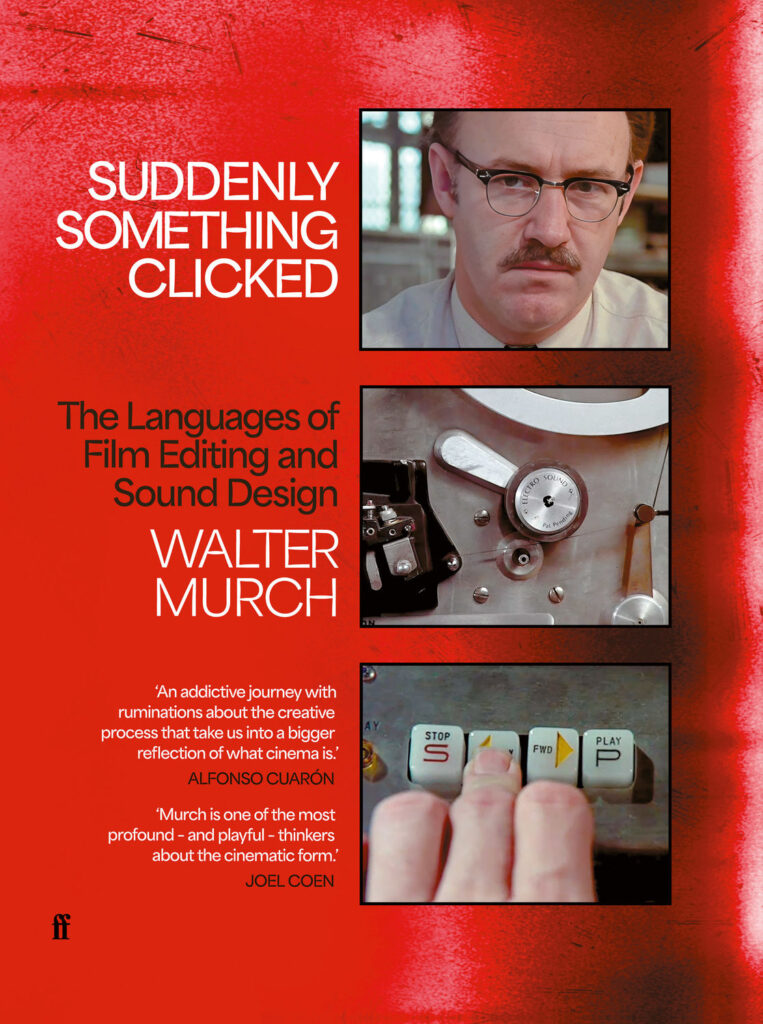
At a sold-out talk at the Hammer Museum in Los Angeles Tuesday night, Murch was interviewed by his good friend and fellow author Lawrence Weschler about his new tome, Suddenly Something Clicked: The Languages of Film Editing and Sound Design.
Those expecting a master class of highlights during his six decades of film innovation were also treated to a lecture on biophysics and recent advances in the science of DNA.
Murch read from the foreword of his book which compares filmmaking to a 16th century galleon at sea that knows its latitude but not the longitude and has little idea of how long it will take to arrive at its destination and what it might bring back in profits.
“There are intuitive forces based on the experiences of previous generations and how to survive as sailors on the sea of cinema with shifting shores and the discovery of new lands,” Murch says in the foreword. “The shorelines are constantly in flux, creating a process of discovery.”
He then launched into a history of cinema going back to motion photography in the 1800s and through the innovations of sound, digital and now artificial intelligence.
Weschler also took Murch back to his beginnings as a USC film student before founding Zoetrope Films with George Lucas and Francis Ford Coppola in 1969.
He told a fascinating anecdote about how a Coppola wanted him to edit The Conversation while the director himself was tied up in preproduction for The Godfather Part 2. The issue was that Murch had never edited before and he broke down how incredibly complicated the process was on that film, with much of the script not shot – requiring some creative re-shoots, which happened to be on the set of Chinatown.
Murch also discussed his early adoption of digital editing although he was a big fan of the Movieola and is even made a recent documentary about it. He said in his 60 years in the business, 30 were analog and 30 are digital. He said AI is definitely here but still on the shoreline of the ocean in which there could be monsters– like deep fakes – but also wonderful islands.
Murch’s wife Aggie was called onto the stage and talked about his devotion to his work, which at times threatened their marriage. She also has a book out, Harvesting History: While Farming the Flats, which blends the themes of family, farming, and filmmaking.
Murch elicited gasps when he said he was finished with filmmaking and would focus on writing his next two books. After the lecture, he was greeted by lengthy lines of readers wanting him to sign their copy of Suddenly Something Clicked.